
Hidden Meanings in Jewellery Design: Symbolism and Secret Messages
There's something magical about jewellery, isn't there? A ring slipped onto a finger, a pendant resting close to the heart; these pieces do so much more than sparkle: they tell stories. Throughout history they've been one of the most intimate ways human beings have communicated love, loyalty, faith, and belonging.
I've always believed that the best jewellery means something. So today, I want to take you on a little journey through the hidden language of jewellery design, from ancient civilisations right through to the bespoke pieces we're creating here at Fogal & Barnes in Harrogate today.
A Brief History of Symbolism in Jewellery
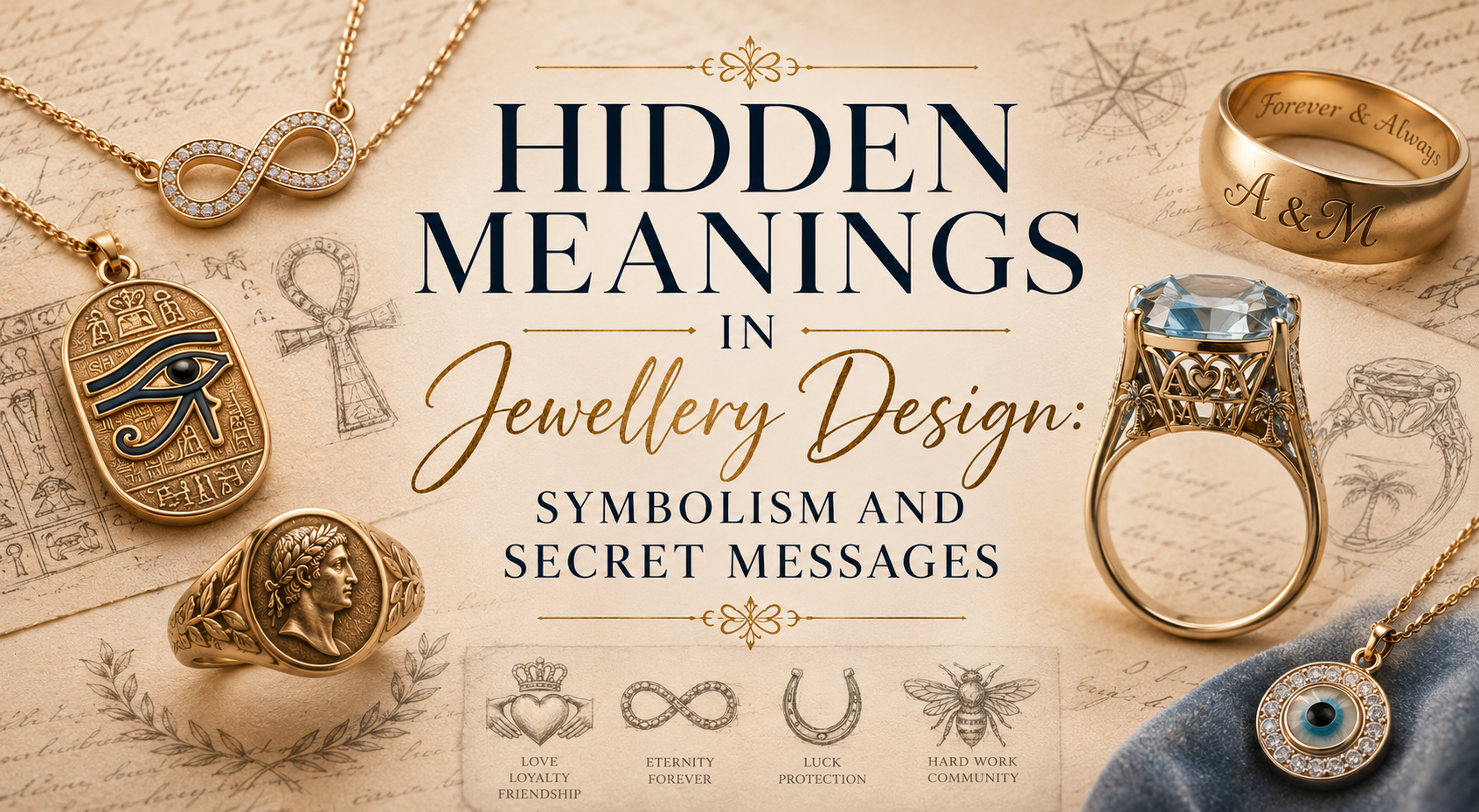
Humans have been using jewellery to send messages for thousands of years. In ancient Egypt, rings and amulets were worn as protection: the scarab beetle symbolised rebirth, the ankh represented eternal life, and the eye of Horus offered divine protection. Jewellery wasn't just decorative; it was spiritual armour.
In ancient Rome and Greece, rings were used as seals and pressed into wax to authenticate documents and letters. Wearing someone's signet ring was a mark of trust and authority: it meant something.
During the Victorian era, jewellery became a deeply coded art form. The Victorians were obsessed with hidden meaning; acrostic rings spelled out words using the first letter of each gemstone. A ring set with Ruby, Emerald, Garnet, Amethyst, Ruby, and Diamond would spell out R-E-G-A-R-D. A quiet declaration of affection, worn on the hand, visible to everyone, but only readable by those who knew the code.
Posy rings, simple bands engraved with short love poems or mottos, were exchanged by lovers from the medieval period right through to the 17th century. The inscription was hidden on the inside, pressed against the skin. A secret shared between two people.
And then there's the Claddagh ring, originating in Ireland, with its hands, heart, and crown representing friendship, love, and loyalty. Or the infinity symbol, the evil eye, the horseshoe, all carrying meaning that transcends language and culture.
The Language of Gemstones
Stones have carried symbolic meaning for just as long. Birthstones are the most well-known: each month assigned a gem with its own properties and history. But the symbolism runs much deeper than that.
- Diamonds - the hardest natural substance on earth - have long represented strength, eternity, and invincibility.
- Sapphires symbolise loyalty, wisdom, and sincerity
- Rubies represent passion, protection, and love. In many cultures, they were believed to bring good fortune to their wearer.
- Emeralds carry associations with hope, renewal, and new beginnings - perhaps why they're such a beautiful choice for a fresh chapter in life.
- Amethysts have historically been linked to clarity of mind and calm. Ancient Greeks believed they prevented intoxication (the name literally means "not drunk" in Greek)
- Aquamarines evoke the sea, serenity, and safe passage. They were traditionally carried by sailors as a talisman and are associated with courage and clarity. They're also one of my personal favourites - more on that in a moment.
- Pearls deserve their own mention entirely. Unique among gemstones in that they're created by a living creature, pearls have been associated with purity, wisdom, and feminine power for centuries. In many cultures, they represent the moon. In others, tears, but tears of joy, of transformation. A pearl is born from irritation, layer by layer, built into something breathtakingly beautiful. There's a metaphor in there for all of us. Pearls have also long been associated with weddings and bridal jewellery, worn as a symbol of new beginnings, innocence, and grace.
The Art of the Engraving
One of the most personal ways to add meaning to a piece is through engraving: a date,, initials, a word that only the two of you understand, or the coordinates of a place that changed everything.
Engraving has been used for centuries to personalise jewellery, from the posy rings of the Tudors to the personalised lockets of the Victorians. But today, modern engraving techniques mean we can go even further, with beautifully precise script inside bands, on the back of pendants, or hidden on the underside of a setting.
The beauty of an engraving is that it's yours. It may be invisible to the world, but it's always present for you.
Secret Messages in the Mount
At Fogal & Barnes, one of my favourite things we do is incorporate personal meaning directly into the design of the mount itself, the setting that holds the stone.
A mount isn't just structural, it can be a canvas.
I recently worked with a lovely client on her bespoke dress ring for her wedding day (see our previous blog on the history of 'Something Blue') - she wanted to incorporate a little "something blue" as a nod to the old bridal tradition. We created a stunning aquamarine ring, and built her initials directly into the design of the mount. Subtle, personal, and completely unique to her. Every time she looks down at her hand, those initials are there; a little secret between her and the ring.

Our customer's initials, set into the band of her 'something blue' ring
Then there's my own aquamarine ring, which I wear with enormous pride. Set into the mount are palm trees; a quiet, personal tribute to my Middle Eastern heritage. It's a piece that looks beautiful to anyone admiring it, but carries a whole world of meaning for me. That's exactly what jewellery should do.
The possibilities are genuinely endless: floral motifs, celestial symbols, initials, patterns with cultural significance, animals, trees, waves. A skilled jeweller can work almost any symbol into a mount, and the result is something that transcends a beautiful ring into a piece of personal art.

The mount of Mona's beautiful aquamarine ring
Other Symbols Worth Knowing
A few more favourites, if you're thinking about the meaning you'd like to carry with you:
- The serpent - endlessly misunderstood, the snake in jewellery has historically represented eternity, wisdom, and transformation. Queen Victoria wore a serpent engagement ring given to her by Prince Albert.
- Stars and moons - celestial symbols representing guidance, femininity, and the idea that love transcends time and distance.
- Knots - particularly the Celtic love knot, represent bonds that cannot be broken, paths intertwined.
- Feathers - freedom, truth, and connection to something higher.
- Forget-me-nots - used extensively in Victorian mourning jewellery and love tokens, representing exactly what the name suggests.
Let Us Make Something That Means Something
This is what bespoke jewellery is truly about. Not just a beautiful piece, but a piece that carries your story.
At Fogal & Barnes in Harrogate, our bespoke jewellery service exists for exactly this reason. Whether you want to incorporate a symbol from your culture or family history, spell out a word in gemstones, add an engraving no one else will ever see, or design a mount with meaning built into every curve, we would love to help you create it.
Come in and have a chat. Tell us your story. The best jewellery always starts with one.
Mona x