

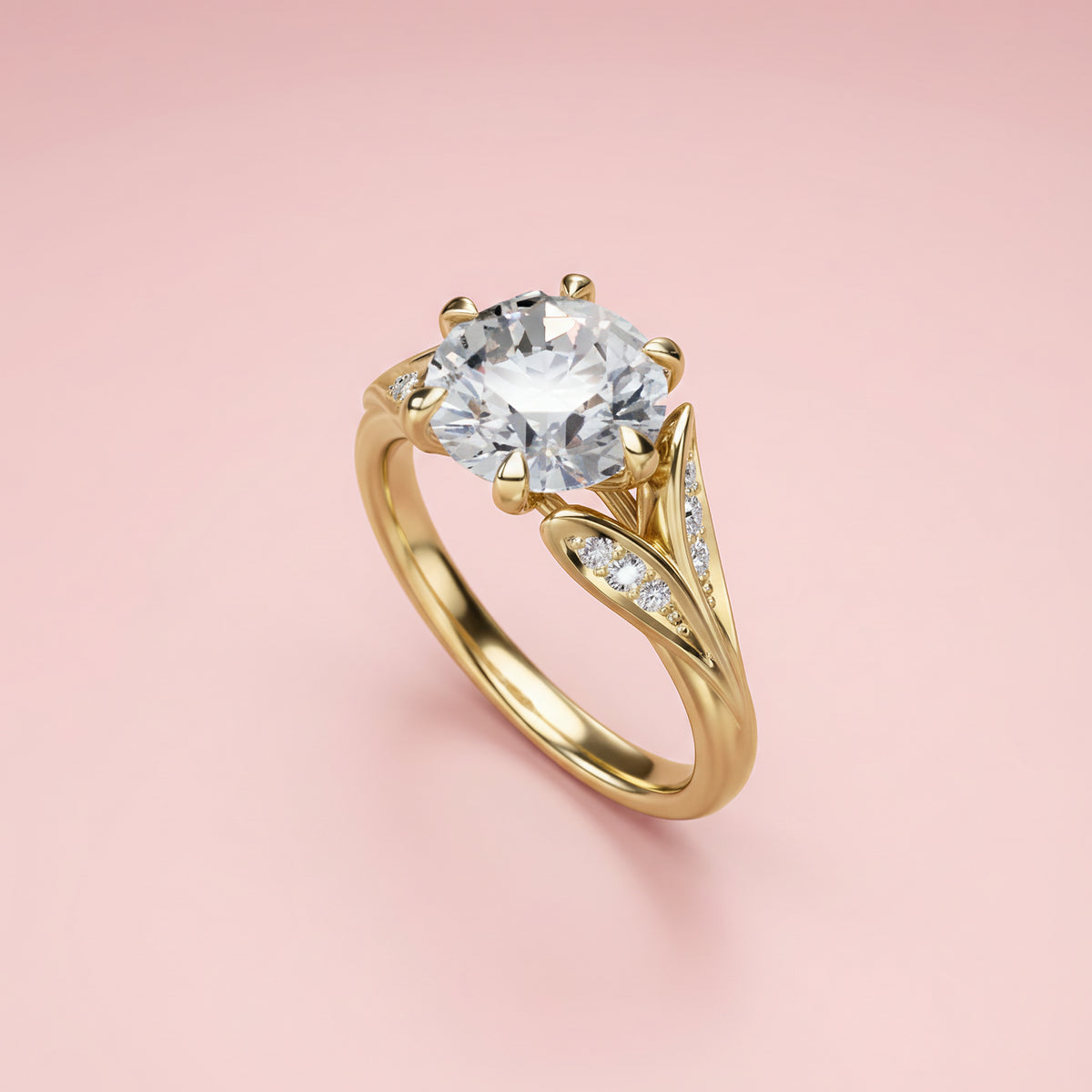
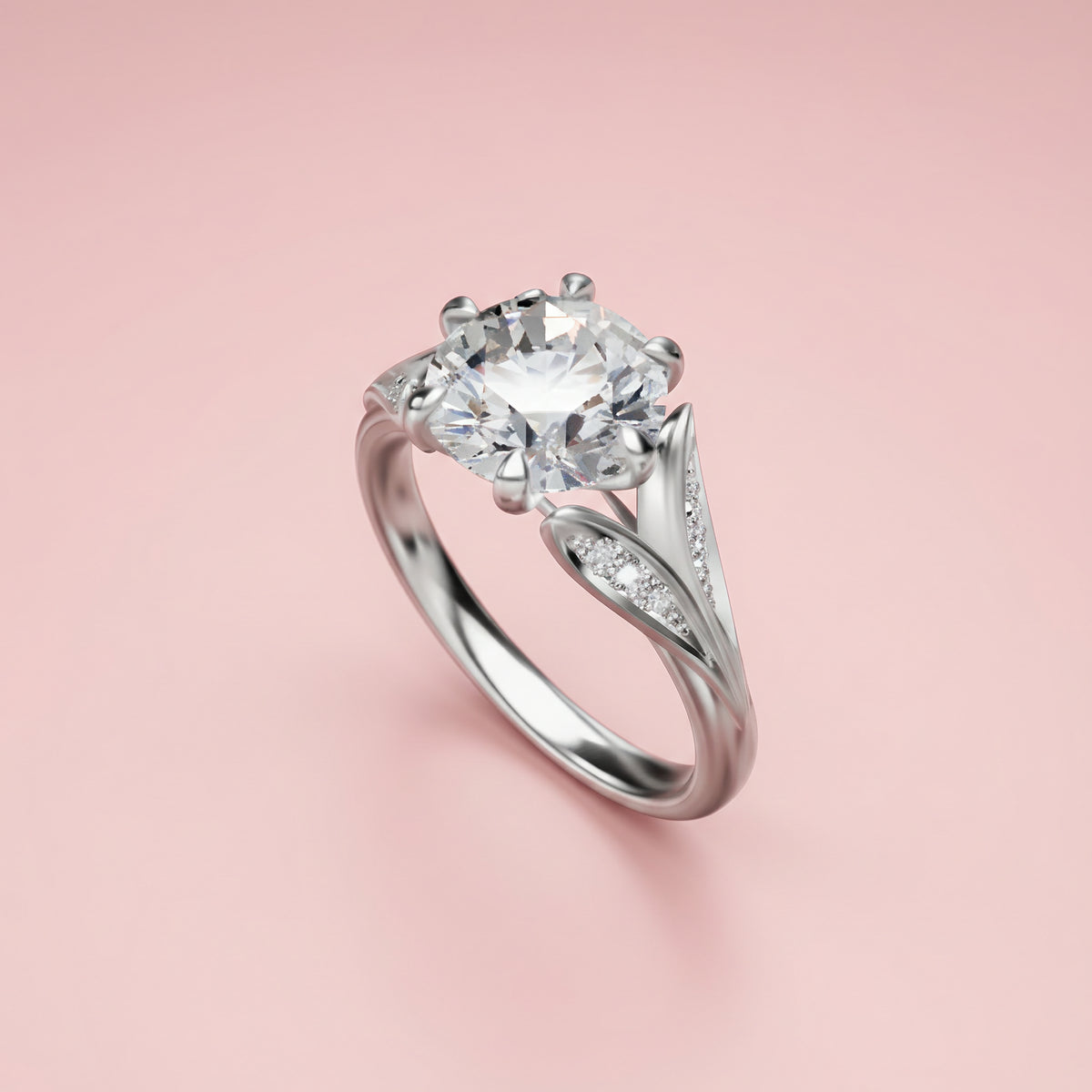
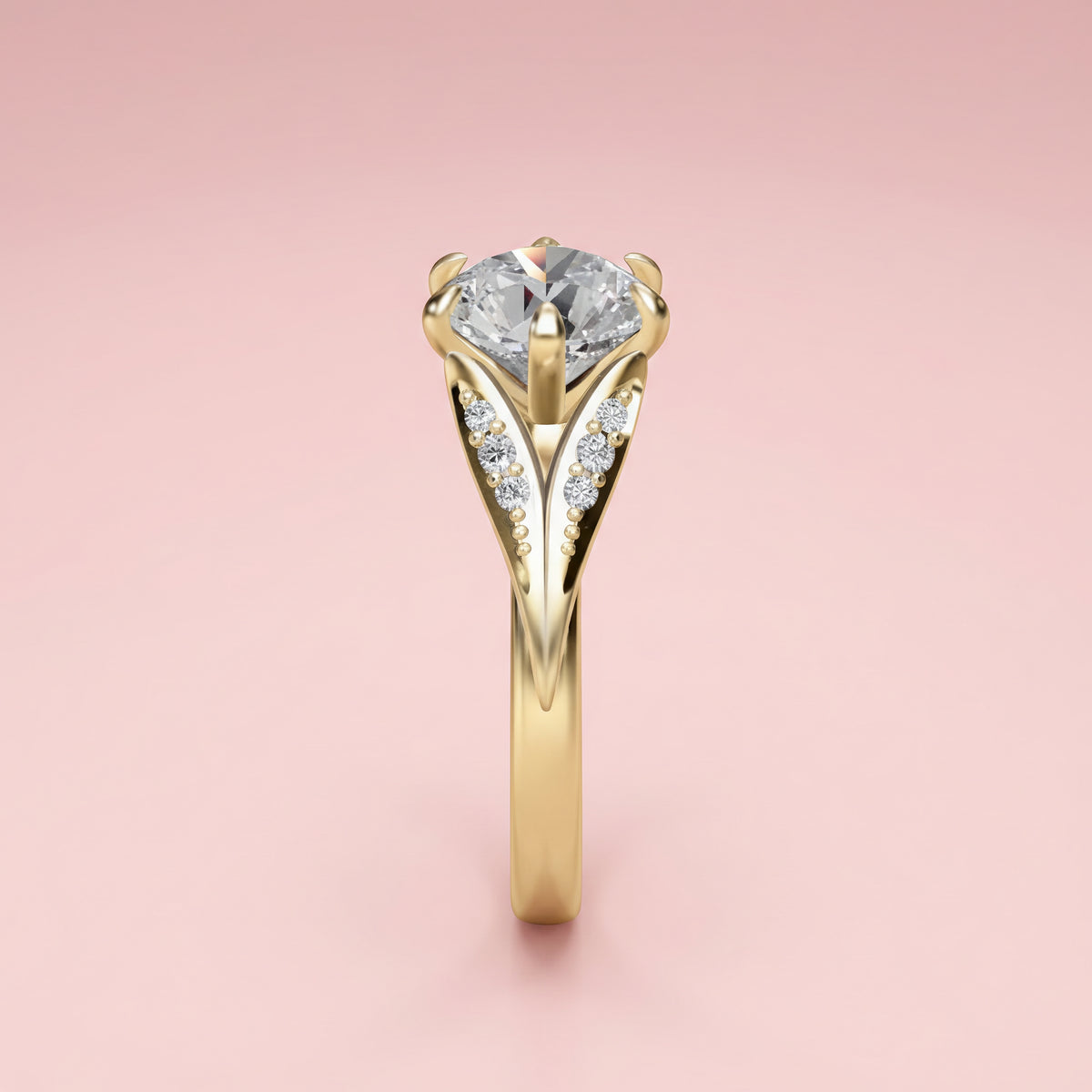
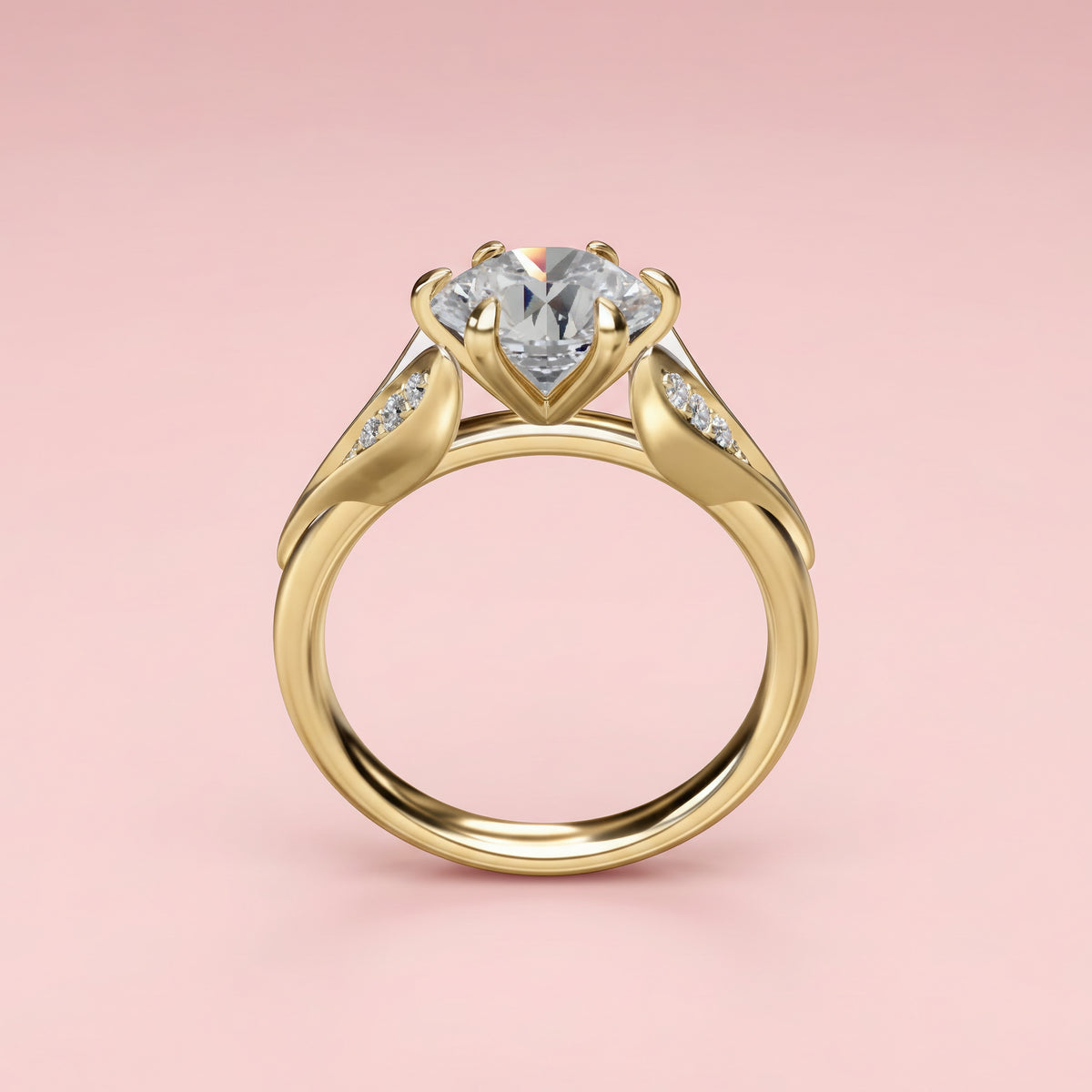
The "Iris" Round Lab-Grown Diamond Engagement Ring with Split Pavé Shoulders

The Iris was inspired by the flowing, natural shapes of Art Nouveau, and she's made to be noticed.
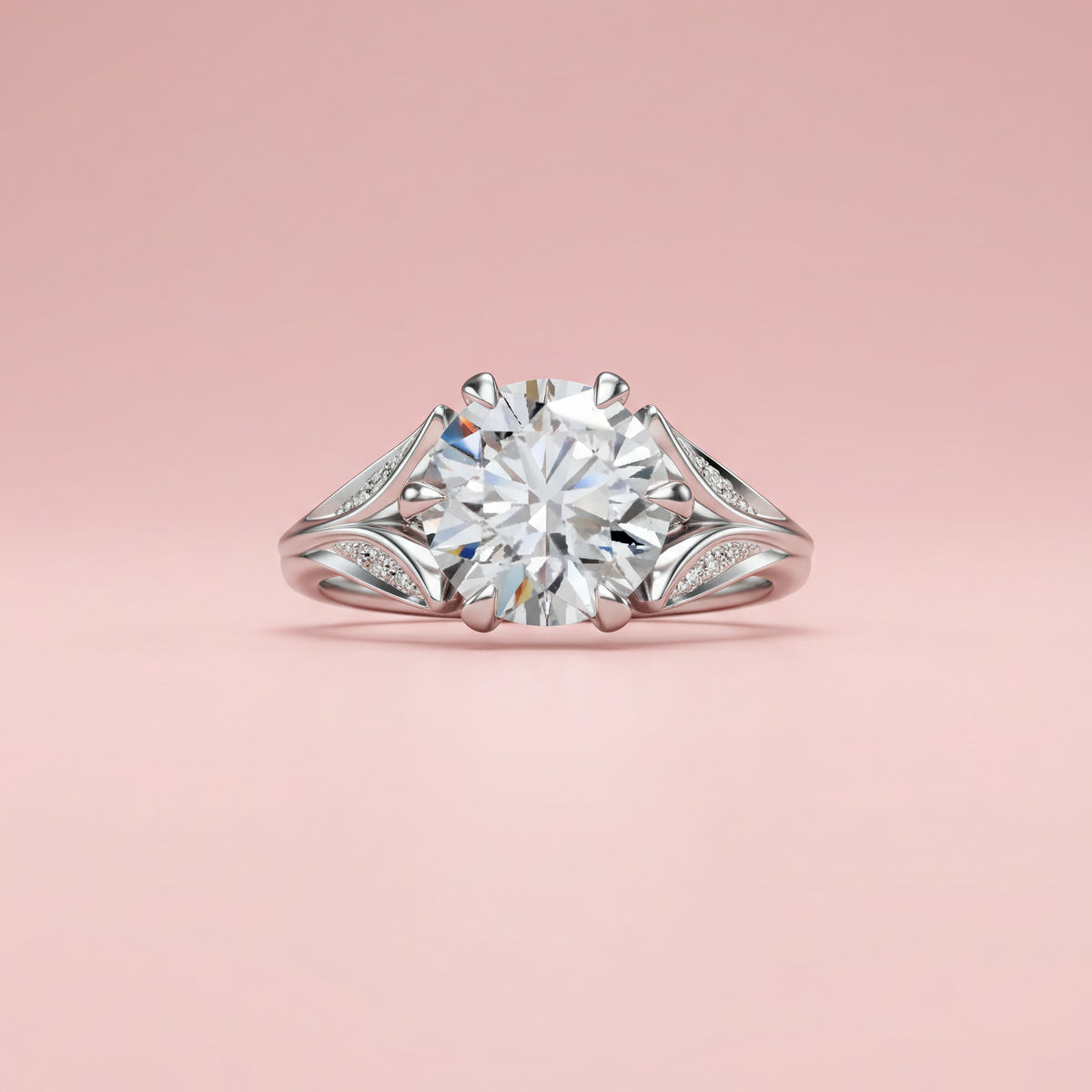
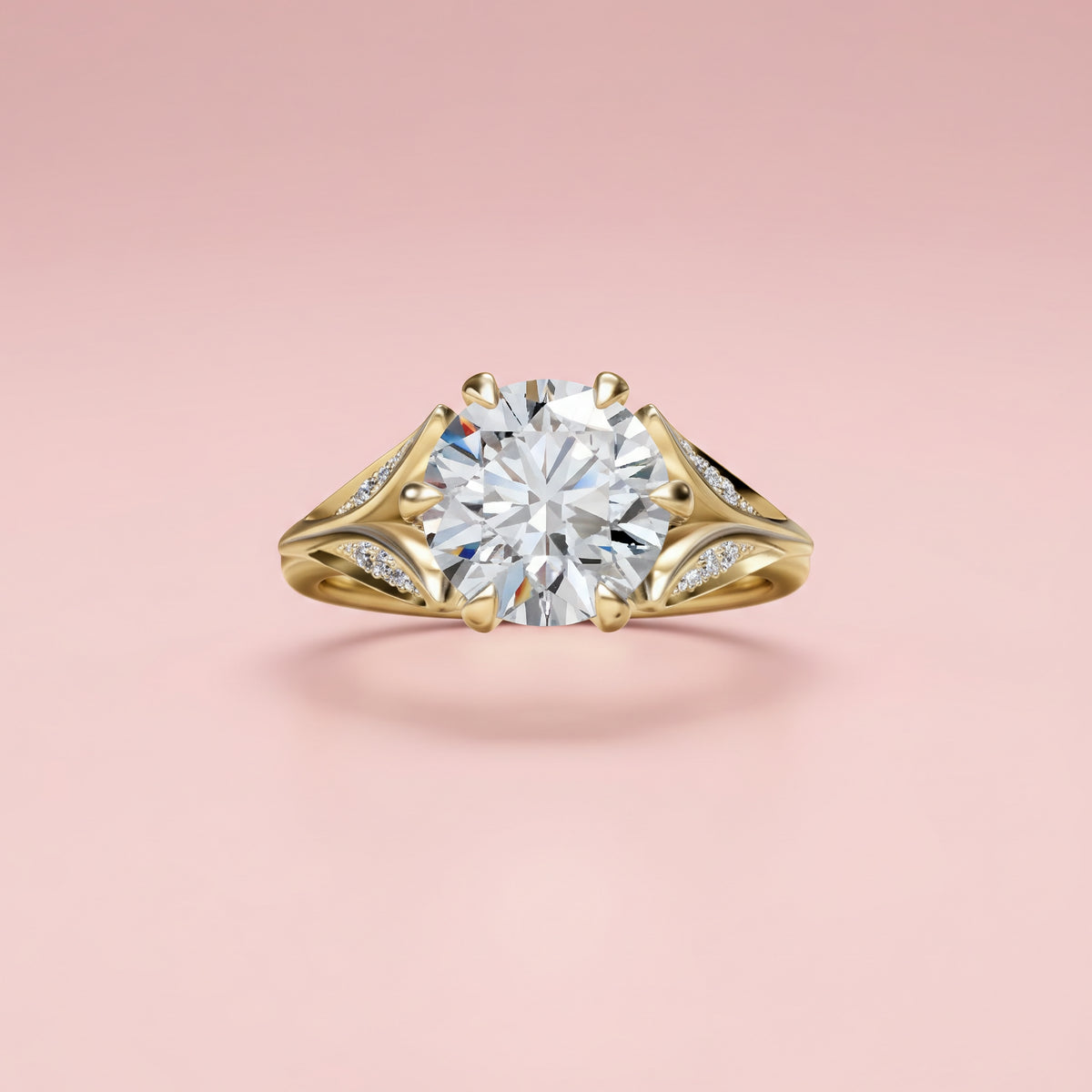
At her centre is a round brilliant lab-grown diamond, E colour or better and VS1 clarity or better. It's held in six slim, tapered claws that keep it secure and give it a soft, flower-like outline. The round brilliant is the most sparkly diamond cut there is, and six claws let the light pour in from every side.
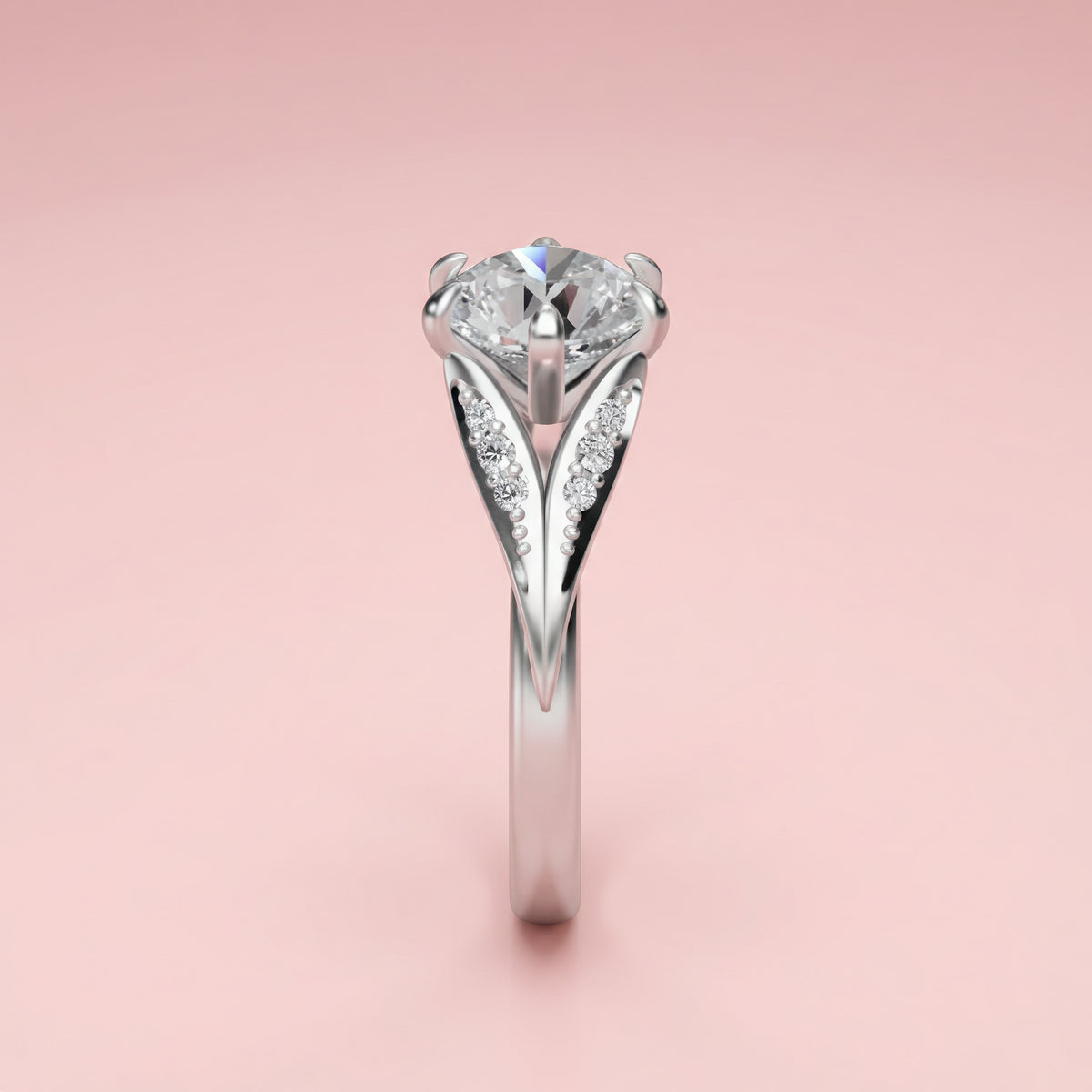
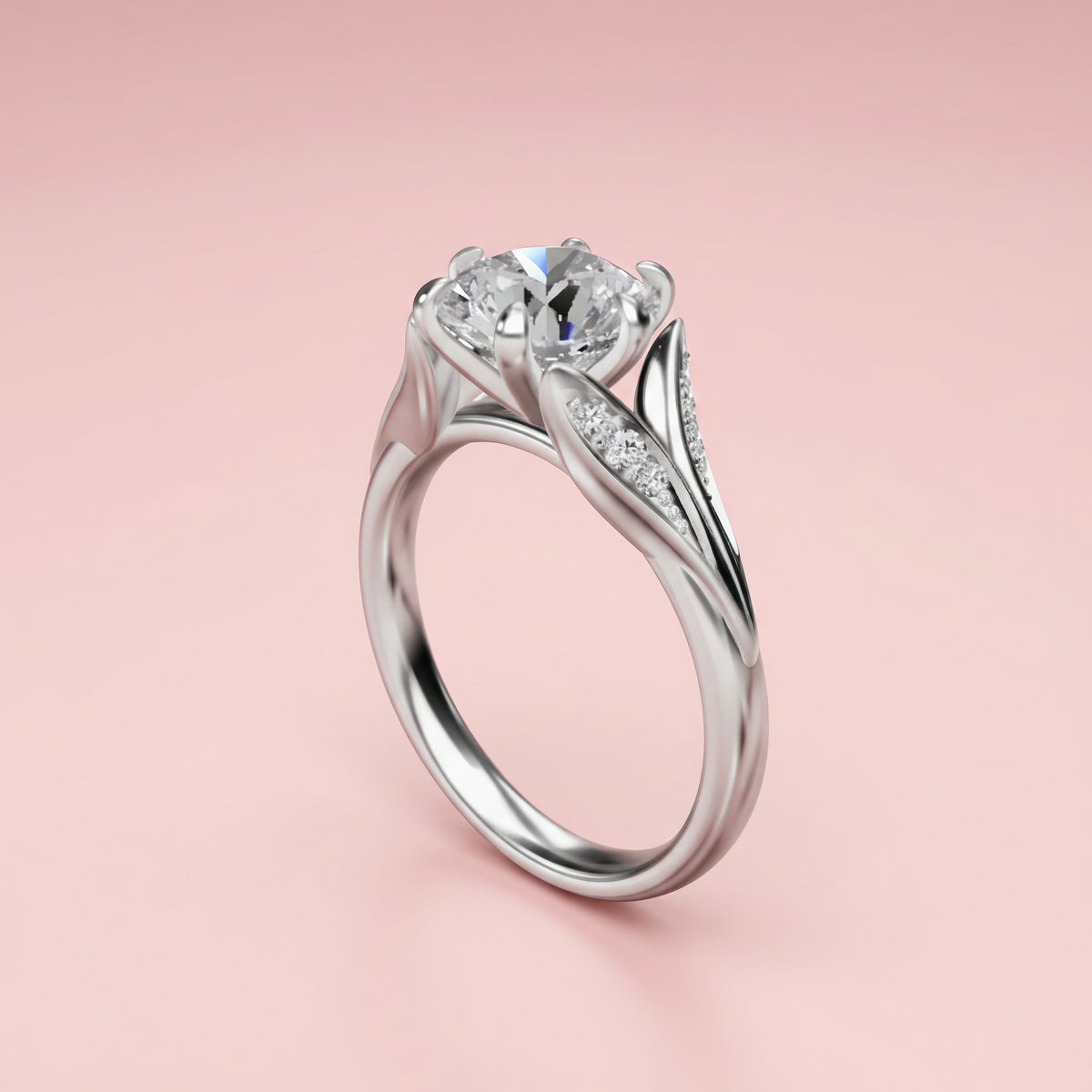
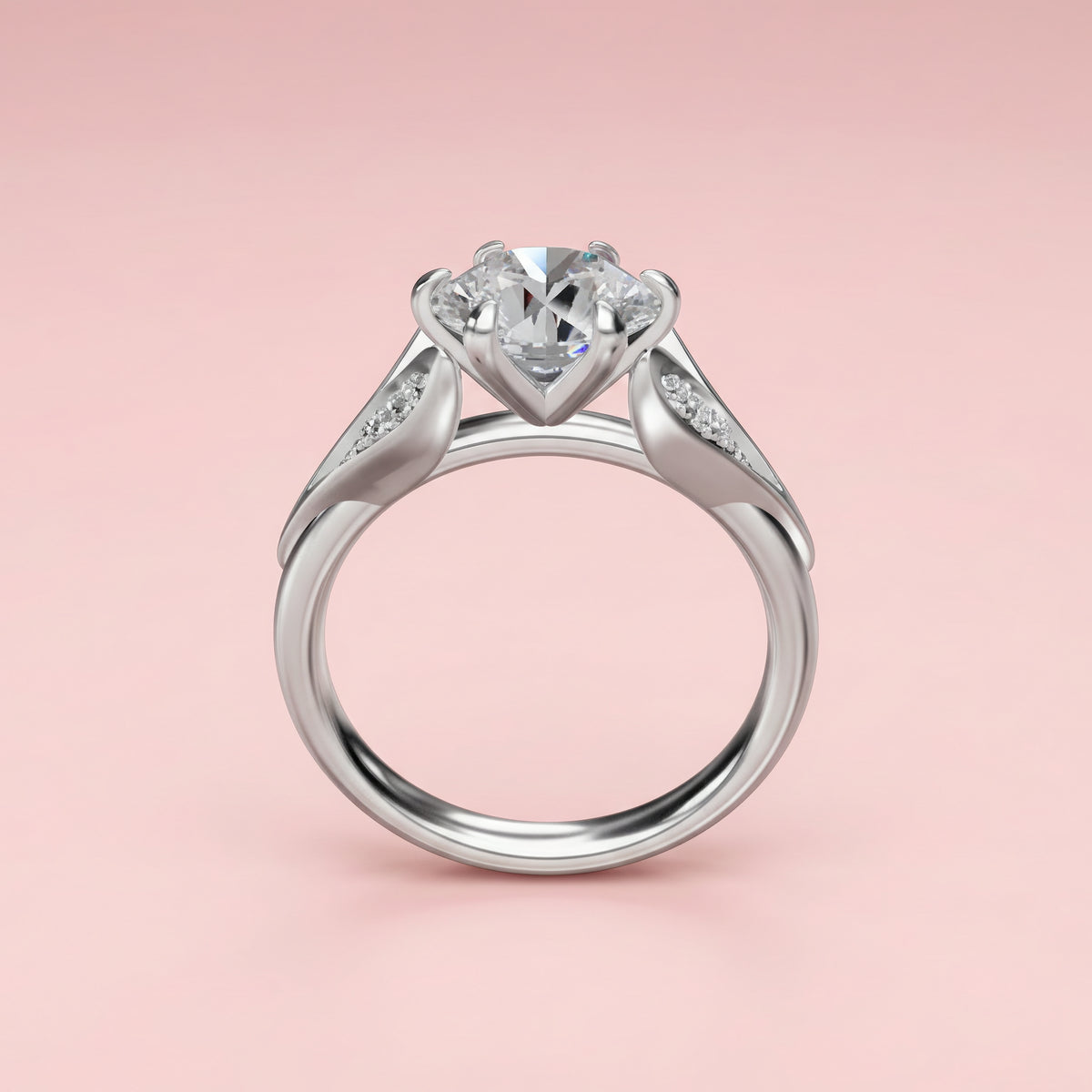
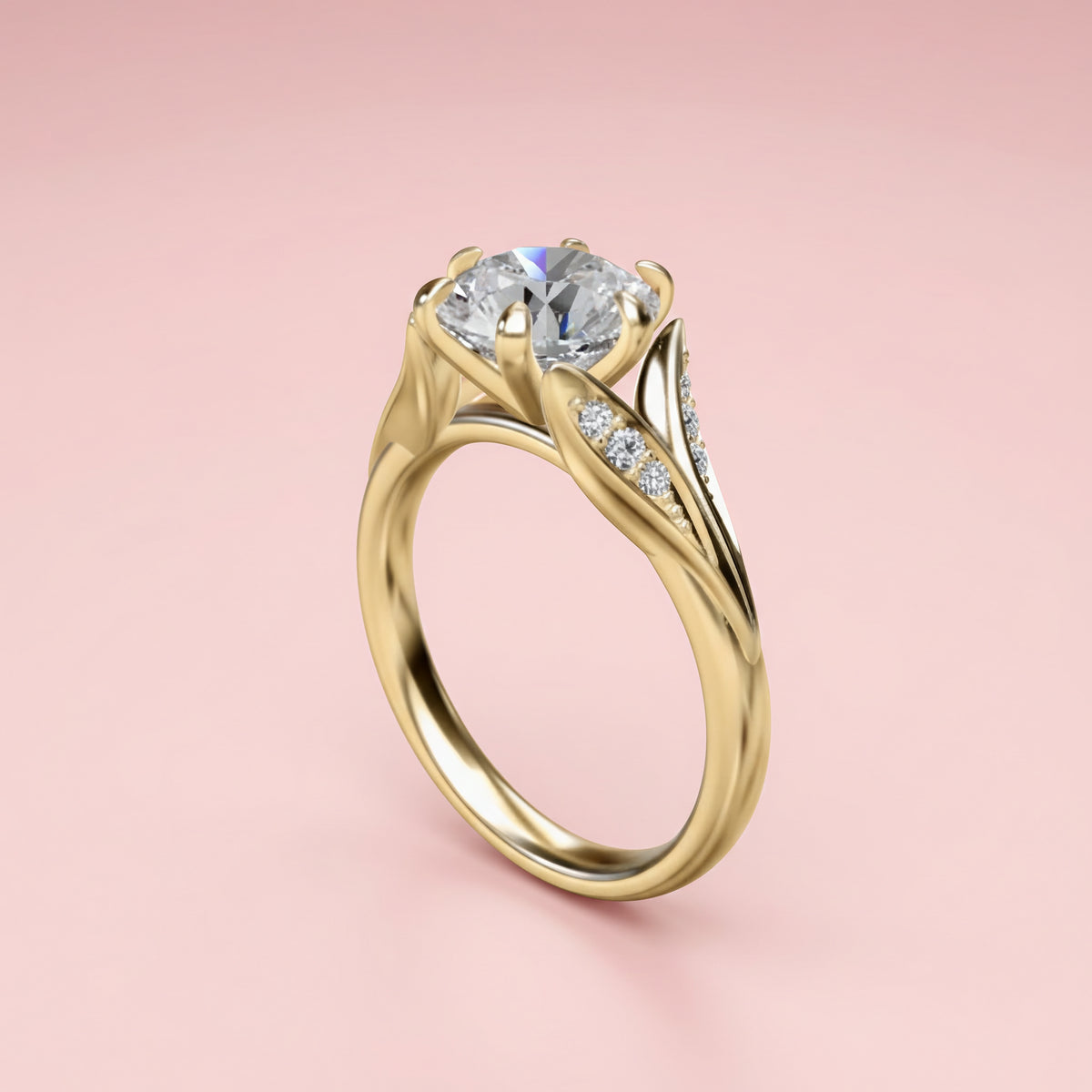
The shoulders are where The Iris really comes alive. On each side the band splits in two and curves up like petals opening around the diamond. Each petal is set with a line of pavé diamonds, finished with fine beaded detail. From the side, the cathedral shape rises gracefully to lift the centre stone, so the ring looks like a flower in bloom from every angle.
She's made to order in our workshop, just for you. Choose yellow or white gold in 9ct, 14ct or 18ct, then pick a centre stone from 1.00ct to 3.00ct.
Please note: the ring in these photos has a 1.50ct centre diamond. If you'd like to see The Iris with a different carat weight, just get in touch and we'll happily send you photos.
Lab-grown diamonds are real diamonds, chemically, physically and optically. With E+ colour and VS1+ clarity, The Iris has a bright, clean, icy-white sparkle.
Specifications
| Collection | Lab-Grown Engagement Rings |
| Centre stone | Round brilliant lab-grown diamond |
| Carat options | 1.00ct, 1.50ct, 2.00ct, 2.50ct, 3.00ct |
| Colour | E or better |
| Clarity | VS1 or better |
| Setting | Six-claw Nouveau setting |
| Shoulders | Split cathedral shoulders with pavé-set round diamonds |
| Detail | Beaded edging on the petal shoulders |
| Metal options | 9ct, 14ct or 18ct yellow gold; 9ct, 14ct or 18ct white gold |
| Photographed | 1.50ct centre stone |
| Lead time | Made to order, 4 to 6 weeks |
| Hallmarking | Hallmarked at a UK assay office |
| Certification | Centre diamond certificate available on request |
FAQ
What is a split cathedral shoulder?
The band splits into two branches either side of the diamond and rises up to the setting, like the arches of a cathedral. It adds height, strength and a lot of character.
Why six claws instead of four?
Six claws hold the diamond extra securely and give it a softer, rounder outline. They're a lovely choice for a round brilliant, especially in larger carat sizes.
What do E colour and VS1 clarity mean?
E is near the top of the colour scale, so the diamond looks bright white. At VS1 clarity, any tiny inclusions are only visible under magnification and can't be seen with the naked eye.
What does the ring look like with a different diamond size?
The photos show a 1.50ct centre stone. Message us and we'll send photos of 1ct, 2ct, 2.5ct or 3ct.
Which metal should I choose?
18ct gold has the richest colour and is the hardest wearing. 14ct is a lovely middle ground. 9ct is lighter on the budget. If you're unsure, we're always happy to talk you through it.
Will a wedding band sit next to it?
The split shoulders are wider than a plain band, so a shaped or curved wedding band often sits best. We can make one to fit The Iris perfectly.
How long will my ring take?
Every Iris is made to order and takes 4 to 6 weeks.
Do you deliver across the UK?
Yes, we deliver fully insured across the UK.
Would you like to see The Iris in person? Book an appointment at our Harrogate showroom on Cambridge Street. We're an easy trip from Leeds and York. We'll put the kettle on and help you compare carat sizes side by side. You can also send us a message on Instagram.
Choose options